

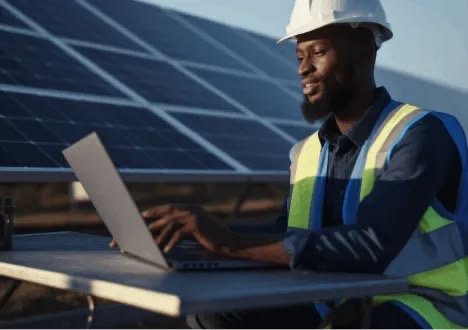
The global energy transition is creating new demand for technical workers, engineers and professionals, but the biggest opportunity may belong to people who start building the right skills early.
The global energy industry is changing rapidly.
Countries are investing in renewable electricity, upgrading power grids, improving energy efficiency and developing technologies designed to reduce dependence on high-emission energy sources.
That transition is also changing the labour market.
A new report from the International Energy Agency (IEA), published in June 2026, says the availability of skilled workers is becoming an increasingly important factor in delivering secure, affordable and sustainable energy systems. The report identifies skills shortages across renewable energy, electricity grids and energy efficiency.
For Africans, including young people in Nigeria, this raises an important question:
What skills could become valuable as the energy sector changes?
What Are Green Jobs?
Green jobs are jobs that contribute to environmental sustainability or support industries moving toward more sustainable production and energy systems.
They are not limited to environmental scientists.
A green economy can require people working in:
- Renewable energy
- Electrical engineering
- Construction
- Manufacturing
- Transportation
- Agriculture
- Technology
- Finance
- Environmental management
- Data and analytics
- Project management
The renewable-energy industry alone already employs millions of people globally.
The latest Renewable Energy and Jobs Annual Review estimates that at least 16.6 million people were employed in renewable energy worldwide. The report was produced by the International Renewable Energy Agency (IRENA) in collaboration with the International Labour Organization (ILO).
This does not mean all these jobs are new jobs created in 2026.
It shows, however, that renewable energy has already developed into a major global employment sector.
Why Skilled Workers Are Becoming More Important
Building renewable-energy systems requires more than installing solar panels.
Projects need workers who can design systems, install equipment, connect electricity infrastructure, maintain machines, analyse performance and manage projects.
The IEA’s 2026 workforce analysis found that skills requirements are changing across subsectors such as solar photovoltaic systems, wind power and energy efficiency. It also identified shortages and barriers involving education, training and the attractiveness of energy careers.
This creates an interesting situation.
The world may have increasing investment in clean energy, but investment alone cannot build and operate these systems.
People with the right skills are also needed.
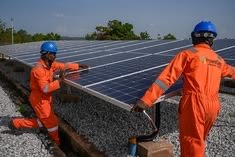
1. Solar Installation and Maintenance
Solar energy is one of the most visible parts of Africa’s energy transition.
For someone starting from a technical background, solar installation can provide an entry point into the renewable-energy industry.
Useful skills include:
- Solar panel installation
- Inverter installation
- Battery systems
- Electrical wiring
- System sizing
- Fault diagnosis
- Preventive maintenance
- Safety procedures
However, people should avoid treating solar installation as simply a short course that guarantees employment.
Professional competence matters.
A worker who understands electrical systems, battery technology, safety and system design can potentially progress beyond basic installation work.
2. Electrical and Power Systems
As renewable electricity expands, electricity networks also need to expand and become more flexible.
That creates demand for people who understand:
- Electrical systems
- Power distribution
- Grid infrastructure
- Protection systems
- Energy storage
- Power electronics
- Electrical safety
This is an area where formal engineering or technical education can be particularly valuable.
For students deciding what to study, electrical engineering and related technical disciplines can therefore remain relevant to the changing energy sector.
3. Battery and Energy Storage Technology
Renewable energy does not always produce electricity at the exact time consumers need it.
Solar power, for example, is generated during daylight hours, while electricity demand can continue after sunset.
Energy storage can help address this problem.
That makes batteries and other storage technologies increasingly important to modern energy systems.
Future opportunities can include:
- Battery installation
- Battery management systems
- Maintenance
- Energy-storage engineering
- Testing and diagnostics
- Recycling and end-of-life management
This is still an evolving field, so people entering it should expect the technology to continue changing.
4. Energy Efficiency
Not every energy solution requires producing more electricity.
Another important opportunity is reducing the amount of energy needed to perform a task.
Energy-efficiency professionals can work on areas such as:
- Efficient buildings
- Industrial energy management
- Energy audits
- Efficient appliances
- Cooling systems
- Manufacturing processes
- Building insulation
- Smart energy management
The IEA includes energy efficiency among the sectors experiencing changing workforce requirements and skills needs.
5. Renewable-Energy Engineering
Large solar farms, wind projects, hydroelectric systems and other energy infrastructure require engineers.
Depending on the project, this can involve:
- Electrical engineering
- Mechanical engineering
- Civil engineering
- Environmental engineering
- Software and control systems
- Project engineering
This is one reason the energy transition should not be viewed as an entirely new industry.
Many traditional technical professions can simply develop new applications within the energy transition.
6. Climate and Environmental Data
The energy transition is also becoming increasingly data-driven.
Companies and governments need information about:
- Energy consumption
- Weather patterns
- Solar radiation
- Electricity demand
- Carbon emissions
- Environmental risks
- Infrastructure performance
This creates opportunities for people with backgrounds in data analysis, geography, environmental science, statistics and technology.
Someone who can combine data skills with energy knowledge may therefore have a useful combination of capabilities.
7. Green Construction
The energy transition also affects buildings and infrastructure.
Construction professionals may increasingly encounter requirements involving:
- Energy-efficient buildings
- Solar installations
- Efficient cooling
- Sustainable materials
- Building performance
- Water efficiency
- Climate-resilient infrastructure
This means electricians, plumbers, architects, civil engineers, construction managers and technicians can all potentially interact with the green economy.
8. Electric Mobility
Transportation is another area undergoing technological change.
Electric vehicles require workers with knowledge of:
- Electrical systems
- Batteries
- Charging infrastructure
- Vehicle diagnostics
- Power electronics
- Software
- Maintenance
As electric mobility develops in different markets, these skills could become increasingly useful.
However, the speed of adoption will vary significantly from one country to another.
9. Renewable-Energy Project Management
Not every opportunity in clean energy requires someone to be an engineer.
Large energy projects also require people who can manage:
- Budgets
- Procurement
- Contractors
- Timelines
- Regulatory requirements
- Stakeholders
- Operations
This creates space for project managers, accountants, lawyers, procurement specialists, business analysts and other professionals.
The energy transition is therefore broader than technical installation.
10. Digital Skills Can Also Matter
Technology is becoming increasingly connected to energy systems.
Digital skills can be useful in areas such as:
- Energy monitoring
- Data analysis
- Remote system management
- Geographic information systems
- Automation
- Smart-grid technology
- Software development
- Digital project management
For young people who already have technology skills, the opportunity may therefore be in combining those skills with energy or environmental knowledge.
What Skills Should Young Africans Focus On?
There is no single “green skill” that guarantees a job.
A better approach is to build a combination of technical knowledge + digital ability + practical experience.
For example:
Technical + Digital
Electrical engineering + data analysis
Solar + Business
Solar installation + sales and project management
Environment + Data
Environmental science + GIS/data analytics
Construction + Energy
Construction + energy-efficient building systems
Technology + Energy
Software/data skills + energy management
These combinations can make a person’s skill set more adaptable.
Is This a Good Opportunity for Nigerians?
Nigeria’s energy challenges make energy-related skills particularly relevant.
The country needs reliable electricity for households, businesses, manufacturing, healthcare, education and digital services.
That creates potential demand across different parts of the energy value chain.
But aspiring workers should be realistic.
Learning one short course does not automatically create an international career.
People who want to work locally or eventually compete for opportunities abroad should focus on building verifiable skills, practical experience, recognised qualifications where required and a strong professional record.
That is more valuable than simply collecting certificates.
Can Green Skills Help Someone Work Abroad?
Potentially, yes—but there is an important distinction.
A skill being in demand globally does not automatically mean a person qualifies for a work visa.
Immigration systems have their own requirements involving:
- Qualifications
- Work experience
- Professional registration
- Language ability
- Salary thresholds
- Employer sponsorship
- Occupation lists
- Licensing
Someone considering an international career should therefore research the immigration requirements of the specific country and occupation rather than assuming that a “green job” automatically qualifies for migration.
Where Should a Beginner Start?
Someone starting from zero does not need to learn everything at once.
A practical pathway could look like this:
Step 1: Choose one area.
Solar, electrical systems, energy efficiency, data, environmental management or another specific field.
Step 2: Learn the fundamentals.
Use reputable training programmes, technical institutions, universities or recognised professional organisations where appropriate.
Step 3: Get practical experience.
Work on supervised projects, internships, apprenticeships or real installations.
Step 4: Document your work.
Keep records of projects, responsibilities, results and technical skills.
Step 5: Add complementary digital skills.
Data analysis, project management, software tools or digital communication can strengthen your profile.
Step 6: Research the market.
Find out which employers, industries and countries actually need your skill set.
The Bigger Picture
The energy transition is not happening only because governments are discussing climate change.
Energy demand is growing, technologies are changing and countries are investing in new infrastructure.
The IEA’s 2026 analysis makes clear that workforce development is becoming an important part of this transition because the sector needs people with the right skills.
The ILO’s green-skills programme similarly focuses on preparing people and businesses for a transition that can support productivity and decent work.
For Africa, this could become particularly important.
The continent needs energy, infrastructure and economic growth, while also dealing with climate risks.
That means the people who can build, maintain, finance, manage and improve energy systems could become increasingly important.
Final Thoughts
The green economy should not be viewed as a trend that only concerns environmental scientists.
It is becoming connected to engineering, construction, technology, finance, transportation, agriculture and business.
For young Africans, the most useful question may therefore not be:
“How do I get a green job?”
It may be:
“What valuable skill can I develop that will still matter as the energy system changes?”
The people who start building those skills early may be better positioned to take advantage of the opportunities created by the global energy transition.
