

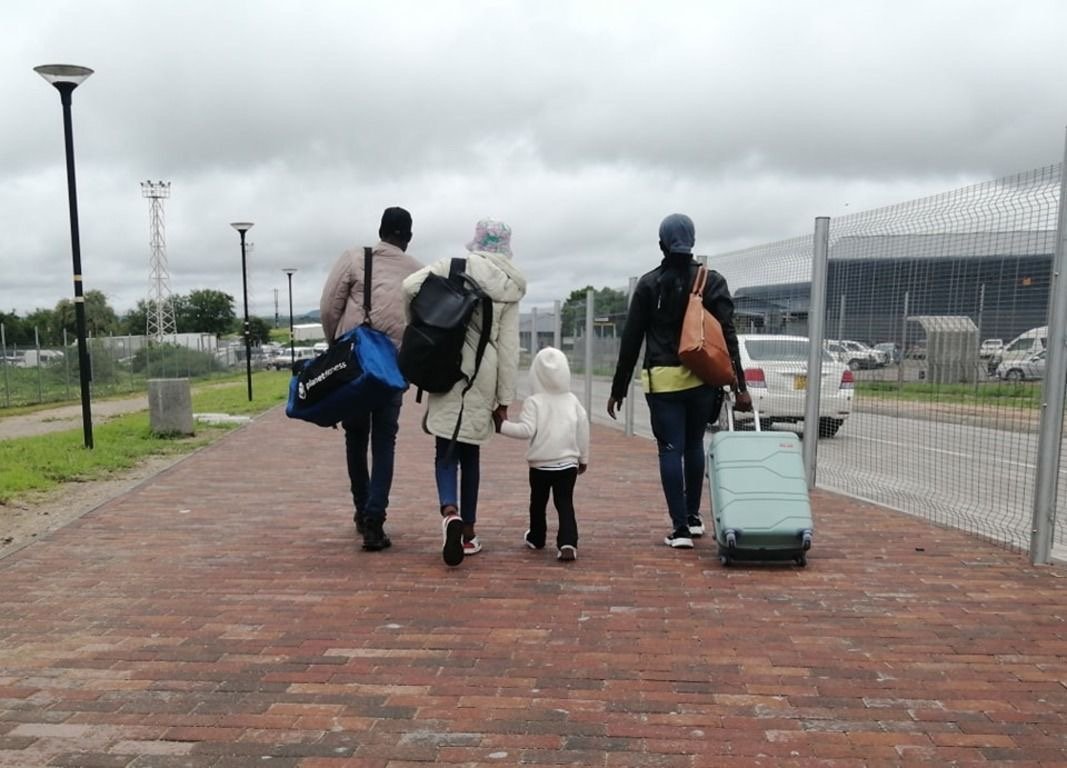
Climate change is increasingly affecting livelihoods, food security and living conditions across Africa, creating another factor that can influence why and where people move.
When people hear the words climate change and migration, they may imagine millions of people suddenly crossing international borders because of rising temperatures.
The reality is more complicated.
Climate change can influence whether people stay, move temporarily, relocate within their country or eventually cross an international border.
It can also make existing economic and social pressures worse.
The International Organization for Migration (IOM) describes climate mobility as a major policy and governance challenge in Africa because environmental change interacts with demographic, socioeconomic and development pressures.
This makes climate change increasingly relevant to conversations about migration, development and the future of work.
How Can Climate Change Influence Migration?
Climate change does not normally act alone.
Imagine a farming community experiencing repeated droughts.
A poor harvest can reduce household income.
Reduced income can affect food security.
If the situation continues, a family may decide to move temporarily to another area to find work.
Another family may remain because it does not have enough money to move.
This shows why climate mobility is complicated.
The same climate event can lead to very different decisions depending on people’s resources, livelihoods, location and access to support.
The IOM’s World Migration Report 2026 notes that climate change is reshaping human mobility through both sudden disasters and slower environmental degradation. It also emphasises the importance of local conditions when understanding climate-related mobility.
Flooding Can Force People to Move
Flooding is one of the clearest examples.
When severe flooding destroys homes, farmland, roads or businesses, people may have to leave temporarily or permanently.
In some cases, displacement can happen within the same community.
In other situations, affected families may move to another city or region.
The movement may be temporary if people eventually return home, or it may become longer-term if rebuilding is difficult.
This is why terms such as displacement, migration and relocation should not be treated as exactly the same thing.
Drought Can Affect Livelihoods
Drought can create a different type of pressure.
A farmer may not be forced out of their home immediately.
Instead, repeated drought can reduce agricultural productivity and income over time.
When livelihoods become less reliable, people may look for work elsewhere.
This can contribute to:
- Rural-to-urban migration
- Seasonal migration
- Livelihood diversification
- Temporary movement
- Permanent relocation
The World Bank has highlighted the way climate impacts interact with poverty, conflict, demographic change and livelihoods in Africa to influence mobility.
Food Security Is Part of the Story
Climate change can affect agriculture through changes in rainfall, temperature and extreme weather.
When agricultural productivity declines, the effects can spread beyond farmers.
Food prices, household income, local employment and community stability can all be affected.
For families whose livelihoods depend heavily on agriculture, this can increase the pressure to seek opportunities elsewhere.
However, it is important not to say that climate change automatically causes migration.
Migration decisions are influenced by many factors.
Climate can be one factor among several.
Cities May Receive More People
Climate-related mobility can also increase pressure on cities.
A person leaving a rural community because of declining agricultural opportunities may move to a nearby town rather than another country.
If many people do this, cities can experience greater demand for:
- Housing
- Water
- Electricity
- Transport
- Healthcare
- Schools
- Employment
This means climate adaptation cannot focus only on rural areas.
Urban planning is also part of the response.
Cities need to prepare for changing patterns of population movement.
What About Nigeria?
Nigeria is particularly relevant to this conversation because climate-related risks interact with the country’s large population, agricultural economy and existing patterns of internal mobility.
The World Bank’s Nigeria climate-migration analysis projected that, under a pessimistic scenario, climate-induced migrants could represent about 2% of Nigeria’s population by 2050, equivalent to an average of approximately 8.3 million people under that scenario.
That figure should not be interpreted as a prediction that 8.3 million Nigerians will definitely migrate because of climate change.
It is a scenario-based projection, designed to show the potential scale of the challenge if climate impacts and development conditions worsen.
The same World Bank analysis found that stronger development and lower-carbon growth could significantly reduce the scale of future climate-induced mobility in Nigeria.
That distinction is extremely important.
Climate migration is not inevitable.
Good development and adaptation policies can change the outcome.
Climate Change Can Also Affect Where Jobs Exist
Migration is not only about escaping danger.
It can also be about finding economic opportunities.
If climate conditions make certain agricultural activities less profitable, people may search for work in other sectors or locations.
At the same time, climate adaptation can create new economic activities.
For example:
- Flood protection
- Solar energy
- Water management
- Climate-resilient construction
- Environmental services
- Sustainable agriculture
- Disaster preparedness
- Infrastructure development
This means climate change can simultaneously create economic pressures and new employment needs.
Why Young Africans Should Pay Attention
Climate change is increasingly becoming connected to the future of work.
Young people entering the labour market may encounter growing demand for skills related to:
- Renewable energy
- Environmental management
- Climate data
- Agriculture technology
- Water management
- Urban planning
- Disaster risk management
- Sustainable construction
- Climate finance
This connects directly to the global energy transition.
As countries invest in adaptation and cleaner infrastructure, they need people who can design, build and manage those systems.
Climate Migration Does Not Always Mean International Migration
One of the biggest misconceptions about climate migration is that it automatically means moving to Europe, North America or another country.
In reality, much climate-related mobility occurs within countries.
Someone affected by flooding may move from one neighbourhood to another.
A farming household may relocate to a nearby city.
A community may temporarily move because of a disaster.
An individual may migrate seasonally for employment.
International migration is only one possible form of mobility.
The IOM’s 2026 research emphasises the need to understand climate mobility through local evidence rather than treating it as one uniform global phenomenon.
What Can Governments Do?
Climate-related migration is not simply a problem for immigration authorities.
Governments can reduce pressure on communities through:
Better early-warning systems
People need timely information about floods, storms and other hazards.
Climate-resilient infrastructure
Roads, drainage, housing, water systems and electricity networks can be designed to withstand increasing risks.
Support for farmers
Better agricultural practices, irrigation, climate information and access to finance can help communities adapt.
Stronger urban planning
Cities need to prepare for population changes rather than responding only after a crisis.
Job creation
People are less likely to be forced into distress migration when communities have resilient and diversified sources of income.
Planned relocation where necessary
In locations facing severe and unavoidable risks, governments may need carefully designed relocation strategies that protect people’s rights and livelihoods.
The IOM’s 2026 work stresses that effective climate-mobility responses need stronger connections between climate action, development, disaster-risk reduction, social protection and migration governance.
What Can Individuals Do?
Individuals cannot stop climate change alone, but they can improve their resilience.
Depending on their circumstances, people can consider:
- Developing multiple sources of income
- Learning new technical skills
- Improving agricultural practices
- Following local early-warning information
- Building emergency plans
- Understanding local climate risks
- Exploring opportunities in growing industries
For young people, developing transferable skills can be particularly useful.
A person who can work across technology, energy, agriculture, construction or environmental services may have more options as economic conditions change.
The Bigger Connection: Climate, Energy and Migration
This is where the climate conversation becomes especially interesting.
Energy affects economic development.
Economic development affects employment.
Employment affects people’s ability to remain resilient.
Climate change affects livelihoods and infrastructure.
And when people’s livelihoods become increasingly difficult to maintain, mobility can become one possible response.
That creates a chain:
Climate pressure → livelihood pressure → adaptation or mobility → changing demand for jobs and services.
But the chain is not inevitable.
Investment in resilient infrastructure, clean energy, education, employment and development can change the outcome.
Africa Has a Choice
Africa’s climate challenge is enormous, but so is its opportunity.
The continent needs more energy, stronger infrastructure, more jobs and better economic opportunities while also dealing with climate risks.
That means climate policy should not be separated from development policy.
Investment in renewable energy can improve energy access.
Investment in resilient agriculture can protect livelihoods.
Investment in cities can prepare them for population growth.
Investment in education can help young people adapt to changing labour markets.
And better migration planning can help people move safely when movement becomes necessary.
Final Thoughts
Climate change is becoming increasingly important to the future of migration, but the relationship is more complicated than simply saying “climate change causes migration.”
People move for many reasons.
Climate-related pressures can interact with poverty, employment, agriculture, conflict, infrastructure and other social and economic factors.
For Africa, the challenge is therefore not only to prepare for people who may move.
It is also to create conditions that allow people to stay safely and productively when they want to stay, while ensuring that those who need to move can do so safely and with dignity.
The choices governments make today about energy, infrastructure, jobs, agriculture and climate adaptation could influence how African communities live and move for decades to come.
